
AI is scaring a lot of people right now. Headlines keep saying machines are taking jobs. Yet the picture isn’t as bleak as it sounds.
Around 58% of businesses still say they’re confident they’ll hire the talent they need in 2026.
That reality became clear to me while job hunting myself. The issue wasn’t my skills or shortage of openings. It was visibility. Some roles appeared on one platform but never showed up on another. Others filled within days, sometimes before most candidates even saw them.
That’s exactly why relying only on LinkedIn doesn’t work anymore. It’s no longer enough to depend on a single source when opportunities are scattered, short-lived, and highly competitive.
I’ve made it easier by narrowing down the job sites that actually work in 2026, so you can spend less time searching and more time focusing on the roles that can actually move your career forward.
TL;DR
| Platform | Best For | Why It’s Useful in 2026 |
| JobCopilot | Automated job search | Find jobs automatically for you based on your selected filters, Applies directly on company career pages |
| Indeed | High-volume job discovery | Massive listing volume across industries, good for market scanning |
| Networking & visibility | Best place to connect with recruiters and get referrals, not applications | |
| HiringCafe | Manual, high-intent applications | Clean listings pulled straight from employer websites |
| Upwork | Freelance work | Strong marketplace for paid freelance and contract roles |
| WeWorkRemotely | Remote-only jobs | Curated remote roles with fewer low-effort applicants |
| Wellfound | Startup jobs | Salary & equity transparency, startup-focused roles |
| The Ladders | $100K+ roles | Targets senior and executive positions with focused listings |
| WayUp | Students & new grads | Entry-level jobs, internships, and employer invites |
| Dice | Tech jobs | Deep filters and large volume of IT and engineering roles |
How We Tested and Selected This List
This list isn’t based on which job sites rank highest on Google or show up in every “top 10” article. That approach rarely helps real job seekers.
Instead, we looked at how people actually use these platforms when they’re stressed, short on time, and trying to make real progress in their careers.
We evaluated each job site across a few practical lenses:
- Popularity: Is the platform actively used by employers and candidates in 2025–2026?
- Helpfulness: Does it genuinely surface relevant roles, or does it just dump thousands of listings on you?
- Signal over noise: Can you find real opportunities without fighting spam, outdated posts, or low-intent listings?
- Real-world feedback: We cross-checked experiences shared on Reddit, career forums, and job-seeker communities where people speak more honestly than they do on polished review sites.
On top of all, we tried to put ourselves in your position.
JobCopilot: Best AI-Powered Job Search Platform
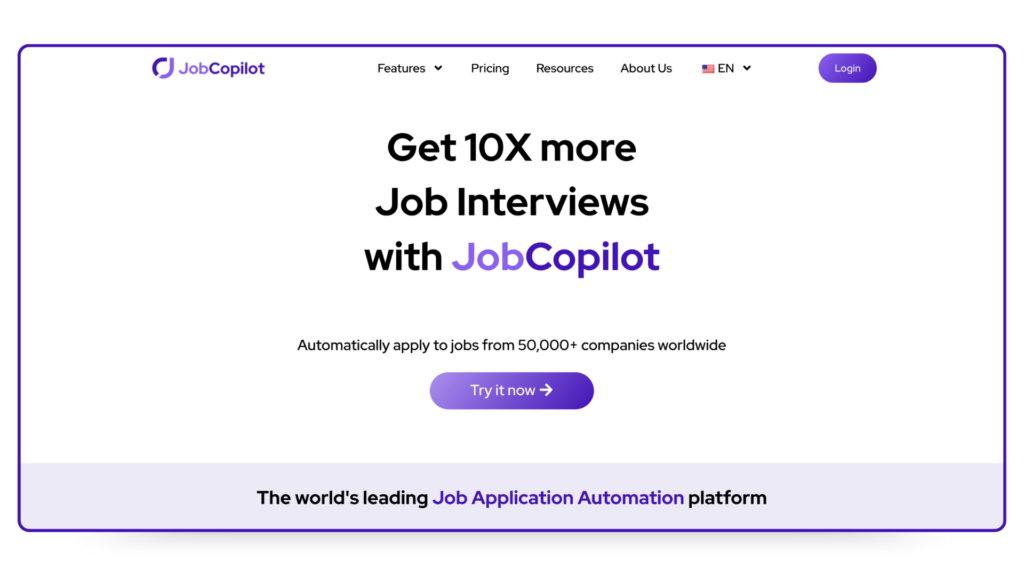
Yes, JobCopilot is our own product, and we’ve placed it first on this list for one simple reason: it literally puts your job search on autopilot.
Most job sites still assume you have hours each day to search, filter, click, and re-apply. JobCopilot flips that model. Once you set your role preferences, locations, and resume details, JobCopilot continuously:
- Finds roles that actually match your profile
- Applies on your behalf while you’re offline
- Keeps your applications moving without daily manual effort
JobCopilot removes the most exhausting part of job hunting which is repetitive applications that drain time and focus.
Let’s see if JobCopilot can solve your job hunting headaches:
Your Job Search Runs in the Background
Traditional job hunting demands constant attention (and burnout). You open tabs, scan listings, tweak filters, fill out the same fields again—only to find out that the recruiter has already hired a referral.
JobCopilot simplifies the process:
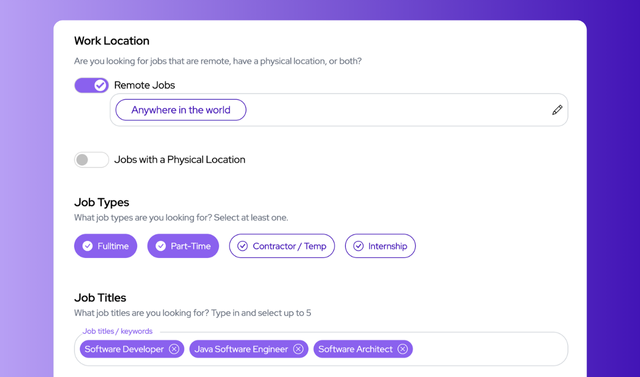
- Select the job titles, locations, and role types you want to apply for.
- Every two hours, your search copilot scans for new jobs that match your criteria by connecting directly to the career pages of over 500,000 companies worldwide.
- Jobs that meet your requirements are saved in your Application Tracker.
- If auto-apply is enabled, JobCopilot automatically applies on your behalf while you’re offline.
Many roles receive dozens of applications within hours. Being early and consistent often beats being perfect. With JobCopilot running in the background, you never miss your favorite job role.
You Apply Before the Role Gets Crowded
One of the most frustrating parts of job hunting is finding a role that feels like a perfect match—only to realize you’re late.
I’ve personally come across many jobs that were a 100% fit for my skills and experience, but by the time I found them, the listing already had dozens of applicants or was close to closing. Not because I wasn’t qualified, but because I simply didn’t see it early enough.
But when speed matters, personalization usually suffers—or the other way around. JobCopilot is designed to handle both:
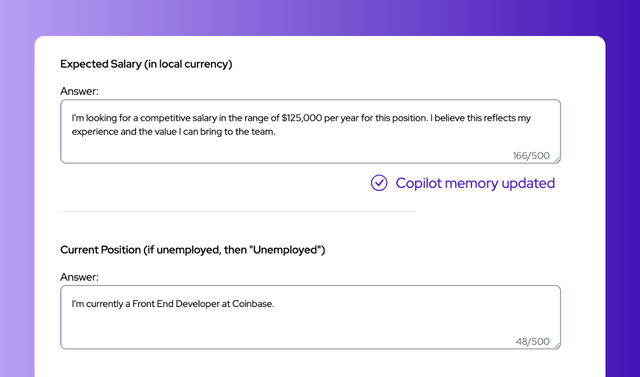
- Remembers edits you make and improves future AI-generated answers
- Adapts to your tone and writing style automatically
- Makes application responses more accurate over time
Stay Organized Without Spreadsheets or Guesswork
Once you start applying at scale, things get messy fast. It’s easy to forget where you applied, what version you used, or whether you ever heard back.
JobCopilot keeps everything in one place:
- Automatically tracks every job you apply to
- Saves job details, company names, and application status
- Gives you a clear view of what’s pending, sent, or closed
There’s no limit to the number of applications you can track in our system.
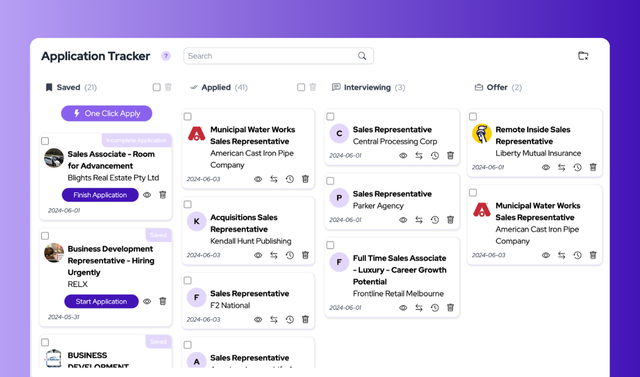
Here are some other JobCopilot’s key features:
- AI resume builder
- AI cover letter builder
- AI mock interviewer
- AI offer & salary negotiation
- AI student career advisor
- AI career change advisor
- AI career personality test
Pros
- Find verified jobs on official company career pages
- Matches jobs based on your exact titles, locations, and filters
- Applies to new job postings every two hours, so you’re early instead of late
- Send up to 50 personalized job applications per day
- Lets you review and edit answers before anything is submitted
- Chrome extension available to apply with your Copilot profile on any site
Cons
- Requires a short setup phase to define roles, locations, and preferences
- Best results come after a few edits, once the copilot learns your tone
Indeed: Best for High Volume Job Listings
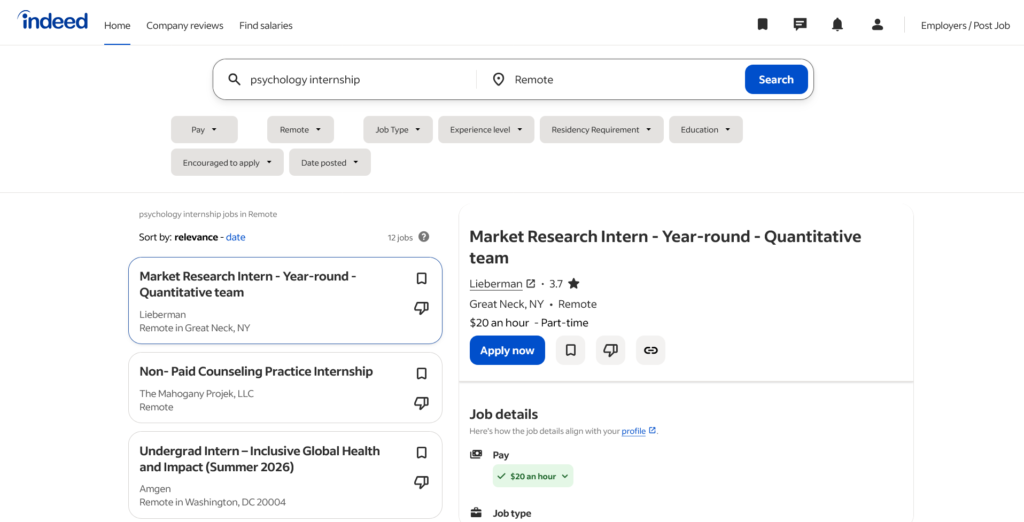
Indeed is already a household name—and for good reason. It’s one of the largest job aggregators in the world. Indeed adds around 15 new job listings every second, which works out to millions of postings every week.
That scale is both its biggest strength and its biggest drawback.
You’ll find roles across almost every industry, location, and seniority level. At the same time, the volume comes with noise. Expect reposts, ghost jobs, and listings that were technically filled weeks (or even months) ago.
How it works
- Employers post jobs directly on Indeed or through ATS integrations
- Indeed aggregates listings from company career pages and other job boards
- Job seekers search by title, location, salary, and filters
- Applications are submitted either on Indeed or redirected to external sites
Pros
- Massive number of job listings across industries
- Strong location-based and salary filters
- Easy resume upload and one-click applications
- Useful company reviews and salary insights
- Good for discovering roles you didn’t know existed
Cons
- High number of reposted or outdated listings
- Ghost jobs are common due to aggregation
- Extremely competitive roles attract hundreds of applicants
- Limited personalization compared to newer AI-driven platforms
- Requires frequent manual filtering to avoid low-quality listings
LinkedIn: Best for Networking
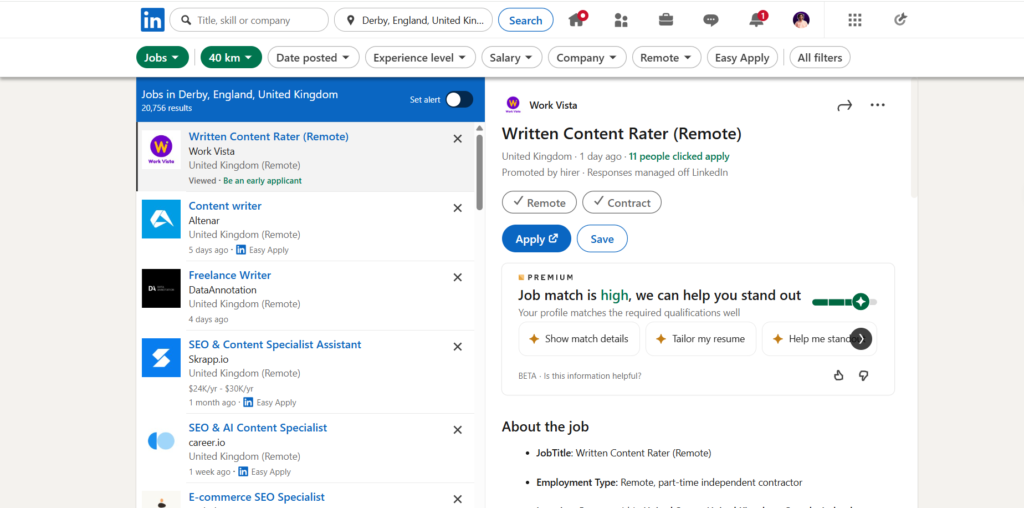
LinkedIn does have a jobs section, but its real strength has always been networking. That means connecting with recruiters, hiring managers, and people already working in roles or companies you’re targeting.
Here are some ways to engage relevant connections:
- Posting thoughtful updates about your career and work.
- Commenting on relevant discussions.
- Sending polite, context-aware DMs.
However, avoid direct selling or asking for jobs too early in the conversation. People don’t like that.
Many job seekers still use LinkedIn mainly for its job listings, and while it hosts millions of posts, quality has declined over the past few years. Roles often attract hundreds of applicants within hours, and response rates are low.
On top of that, recruiters rarely rely on LinkedIn alone. They post jobs in multiple places and often fill roles through referrals or direct outreach.
Pros
- Strong networking potential with recruiters and hiring managers
- Useful for building visibility through posts and comments
- Easy to research companies and employees
- Helpful for warm introductions and referrals
- Good signal of market demand for certain roles
Cons
- Very low response rates from job applications
- Highly competitive job postings
- Quality of listings has declined over time
HiringCafe: Best for Manual Applications
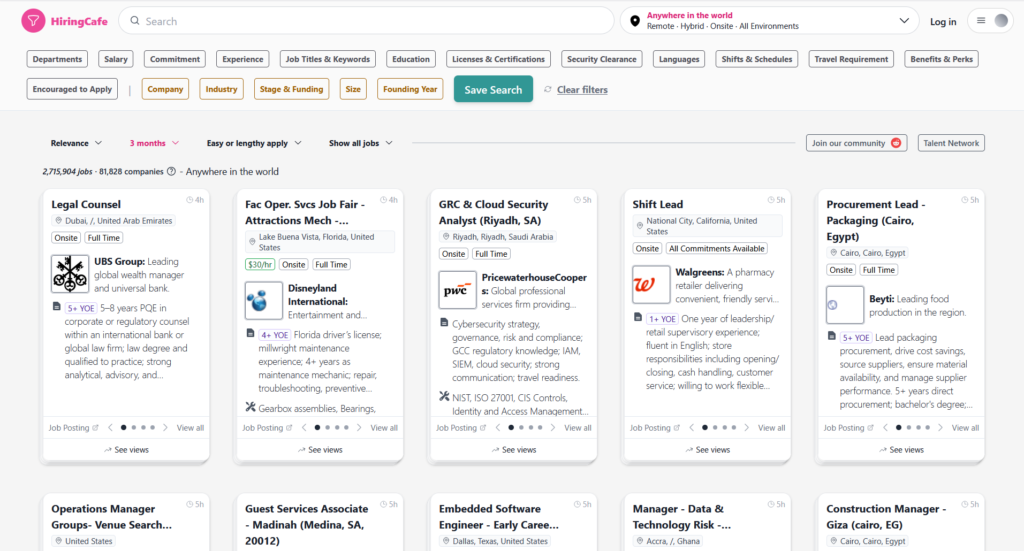
What HiringCafe is actually best at is manual, direct-to-employer applications. It is best suited for focused, high-intent job seeker.
Many listings on big platforms are outdated, reposted, or never actively reviewed. Instead of ranking jobs by popularity, HiringCafe pulls roles directly from employer websites and presents them in a cleaner, more usable way.
How it works
- You set detailed filters (location, remote status, salary transparency, experience, exclusions)
- HiringCafe pulls matching roles directly from employer career pages
- Job descriptions are rewritten to highlight the most important details first
- You apply manually on the employer’s site
Pros
- Direct applications to employer career pages
- Filters work reliably, including remote and salary visibility
- Cleaner, shorter job descriptions
- Less competition than major job boards
Cons
- Requires manual applications for each role
- Not ideal if you only want one-click applications
- Setup and filtering take some initial effort
Upwork: Best for Freelance Jobs
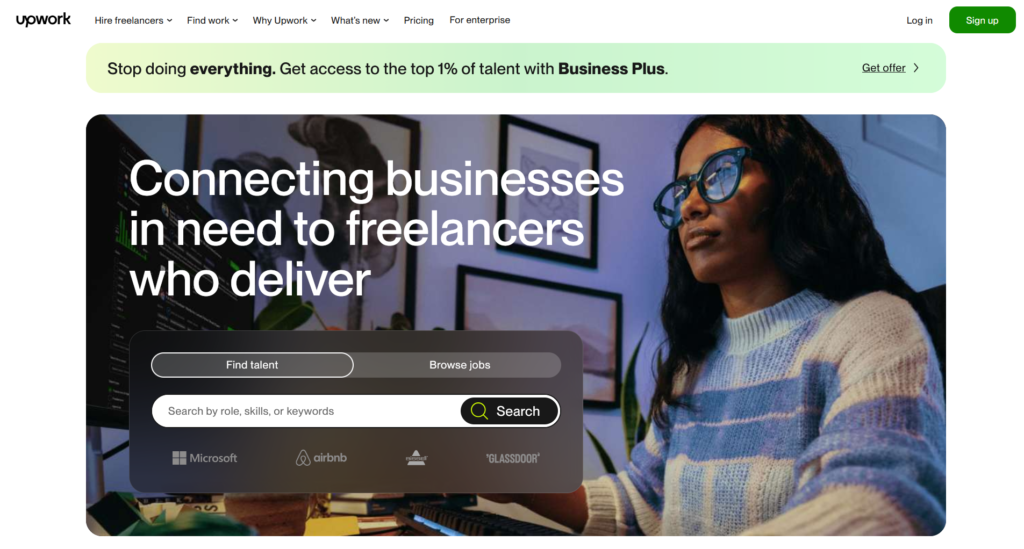
If you’re into freelancing, Upwork still holds a strong position in 2026. Despite the common belief that it’s “too saturated,” there’s still room for skilled freelancers who know how to position themselves and apply strategically.
Unlike many freelance platforms that peaked and faded (such as Guru or Freelancer.com) Upwork has continued to grow and evolve. Today, freelancers on Upwork earn an average of $39 per hour.
Yes, competition is real. You should expect to spend Connects (Upwork’s internal currency) to send proposals and boost visibility. There’s no shortcut around that anymore.
Pros
- Large volume of active freelance jobs across industries
- Strong protections for payments and contracts
- Opportunities for long-term and repeat work
- Freelance roles that can convert into full-time offers
Cons
- Requires spending Connects to apply competitively
- High competition, especially for entry-level roles
- Proposal writing takes time and effort
- Fees apply on earnings (0-15% depending on the category)
- Not ideal for passive or occasional freelancing
WeWorkRemotely: Best for Remote Jobs
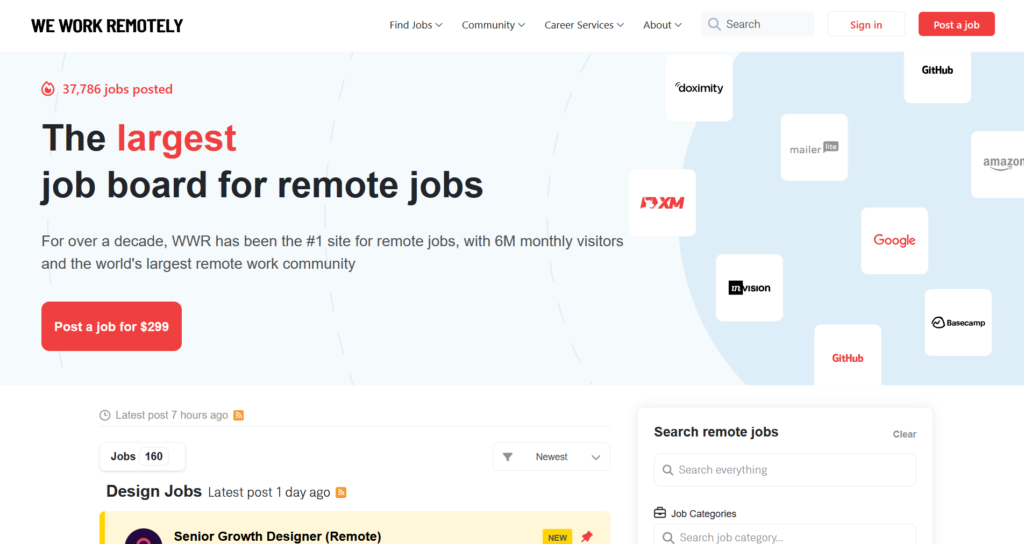
WeWorkRemotely is one of the longest-running remote job boards (they’ve been around since 2011). It’s built for remote work first companies and job seekers.
One big update to know in 2026: applying now requires a paid job-seeker subscription. Their Job Seeker FAQ lists $2.95 for the first month, then $14.95/month, billed monthly as part of a 12-month membership.
A paywall tends to reduce “apply everywhere” behavior. So some postings may feel less crowded than one-click platforms.
Pros
- Remote-first board (not a “remote filter”)
- Jobs are manually reviewed before going live (per their team)
- Simple browsing experience compared to giant aggregators
Cons
- Paywall to apply (first month $2.95, then $14.95/month; 12-month membership)
- Some listings may be country/region restricted
- Certain categories skew senior-heavy
Wellfound: Best for Startup Jobs
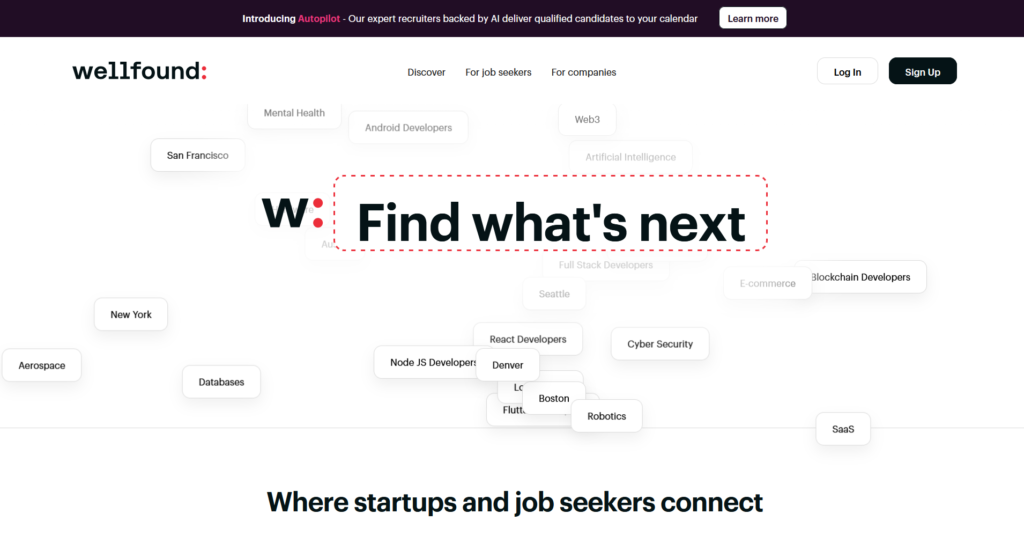
Wellfound is still one of the most well-known job boards for startup roles, and many people like it for the clean UX and the fact that lots of listings show salary and equity up front.
It focuses on early-stage and high-growth companies looking for engineers, product managers, designers, marketers, and other startup-friendly roles.
If your target is early-stage and high-growth companies, the listings are generally more relevant than broad job boards.
Pros
- Salary and equity transparency on many listings
- Cleaner interface than most large job boards
- Good source for tech and startup-oriented positions
Cons
- Response rates can be inconsistent
- Fewer roles compared to large job boards
- Many listings are geared toward mid-to-senior candidates
Ladder: Best for $100K+ Roles
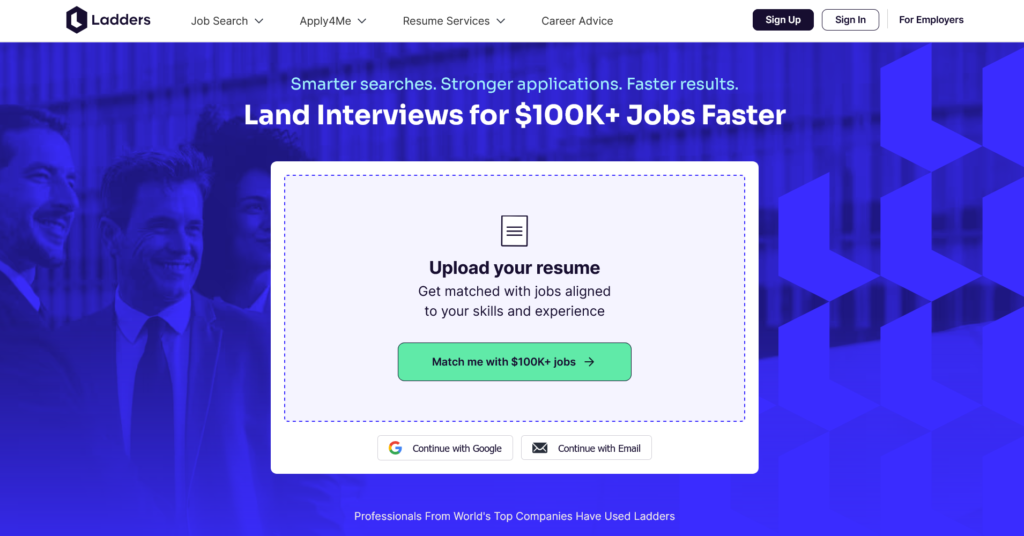
The Ladders positions itself as a job platform for experienced professionals targeting roles with salaries of $100,000 and above. It’s designed mainly for mid-to-senior level candidates in fields like management, tech, finance, marketing, and operations.
Unlike traditional job boards, The Ladders blends job listings with paid career services such as resume rewrites, ATS scans, LinkedIn optimization, and application support. Many features sit behind a paywall though.
Pros
- Focus on $100K+ and senior-level roles
- Useful for experienced professionals refining their positioning
- Resume and ATS tools can highlight gaps in your profile
- Helpful if you want fewer, more targeted applications
Cons
- Limited value for entry-level or mid-junior candidates
- Many features require a paid subscription
- Some listings overlap with free job boards
- Heavy emphasis on paid resume and career services
WayUp: Best for Internships and Junior Roles
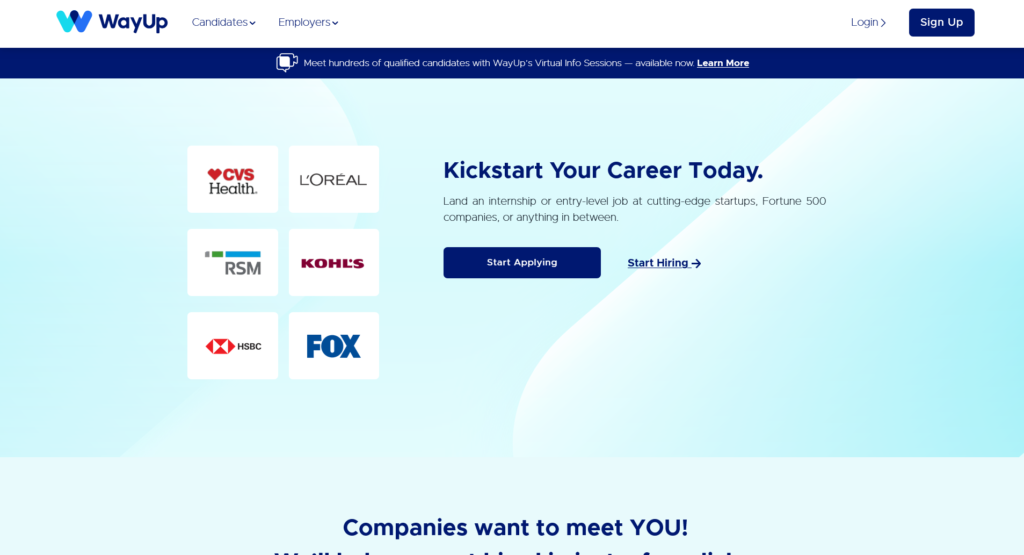
WayUp is built specifically for college students and recent graduates looking for internships, entry-level jobs, and early career opportunities.
After creating a profile, you get a personalized dashboard of jobs and internships you actually qualify for. Many roles support one-click applications, which makes it easier to apply quickly without filling out the same details again and again. Employers can also discover your profile and invite you to apply directly.
Pros
- Personalized job matching based on your profile
- One-click apply saves time
- Employers can invite you to apply directly
- Free to use for students and graduates
Cons
- Limited value for mid-to-senior professionals
- Fewer niche or specialized roles
- Works best for U.S.-based students
Dice: Best for Tech Jobs
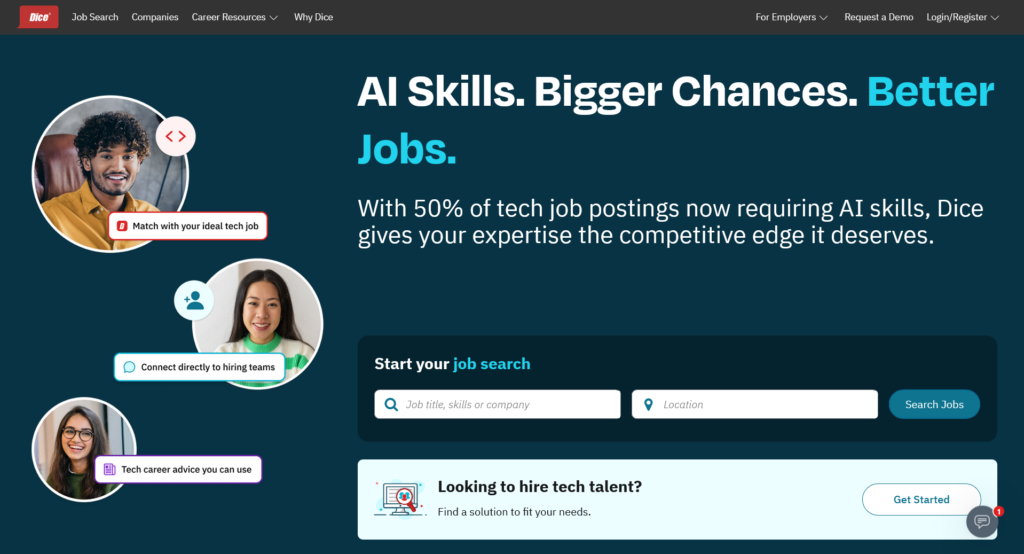
Dice is a job board built almost entirely for tech professionals. If you work in software development, data, cloud, cybersecurity, DevOps, or IT infrastructure, Dice is one of the few platforms where most listings are actually relevant to your skill set.
The platform lets you create a detailed profile, upload your resume, and filter jobs by skills, experience level, location, visa status, and employment type. Dice also sends job alerts when new roles match your profile, helping you catch opportunities early.
It works best as part of a broader strategy, not as your only job search channel.
Pros
- Advanced filters for skills, experience, and visa status
- Large volume of tech-specific listings
- Job alerts help you move quickly
- Resume upload and easy apply save time
Cons
- Limited to tech and IT jobs only
- Some listings feel repetitive or low-quality
- High competition on popular roles
- Interface feels dated compared to newer platforms
The Bottomline
Your best bet in 2026 is to focus on jobs that aren’t flooded with applicants yet. Many of the best roles never stay visible on popular job boards for long. They live quietly on company career pages, and most people miss them because keeping track manually is exhausting.
That’s exactly where JobCopilot fits in. Instead of spending hours refreshing listings and re-applying, it watches company websites for you and applies while you focus on preparing for interviews.
You shouldn’t have to live on job boards to move your career forward. Setup your Copilot today!